This Tiny Worm’s Brain Could Transform Artificial Intelligence. Here’s How
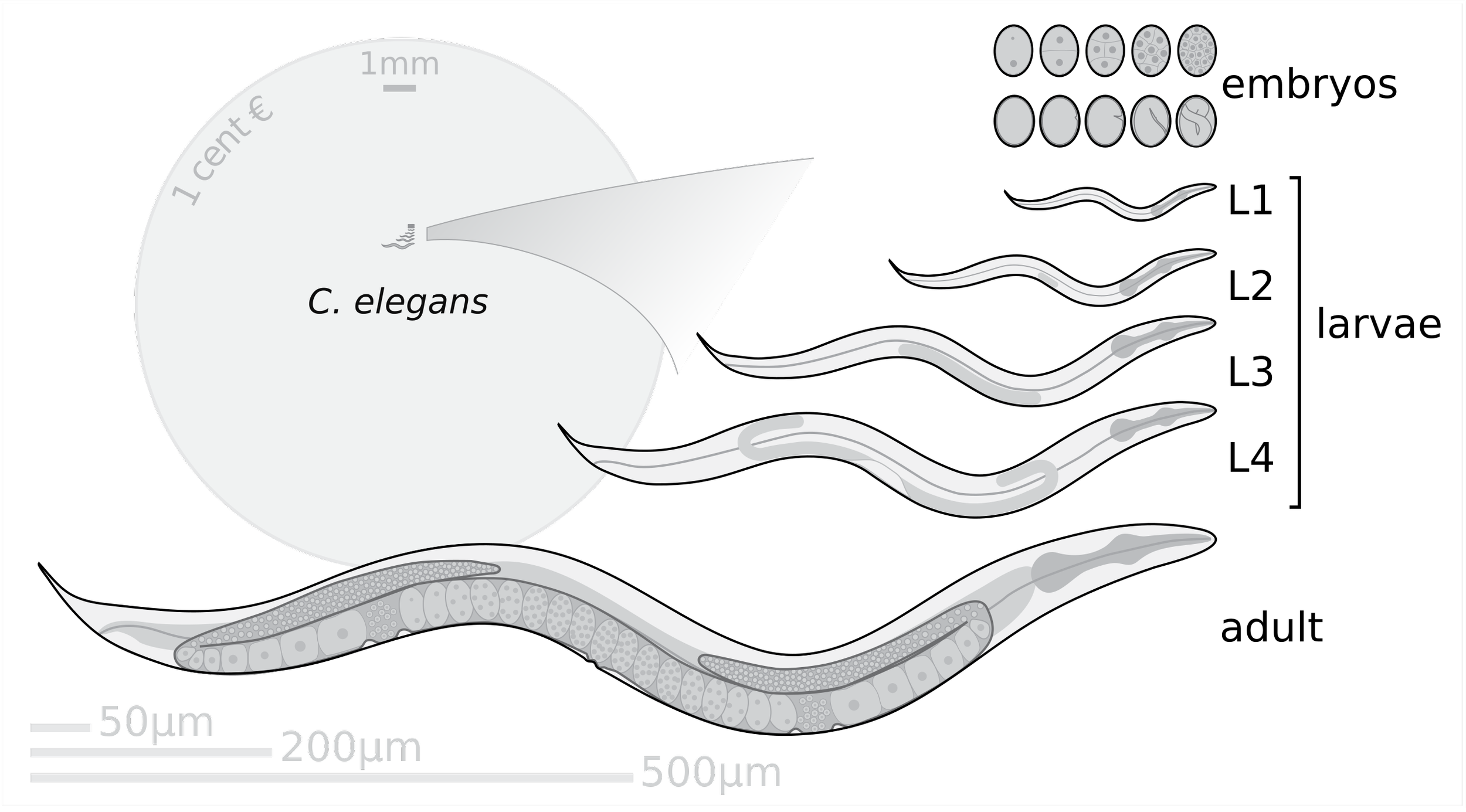
Image Credit: J.J.Froehlich, CC BY-SA 4.0.
In a landscape dominated by massive, energy-consuming artificial intelligence models, a new contender has emerged from an unlikely source: the microscopic roundworm. Researchers led by Dr. Ramin Hasani have developed "liquid neural networks" inspired by the efficient, analog brain of the Caenorhabditis elegans. Unlike the rigid digital structures of conventional AI, these new networks mimic the worm's biological simplicity, promising a shift toward systems that are not only smarter and more transparent but also significantly smaller and less reliant on vast server farms.
The defining characteristic of these liquid networks is their adaptability, a sharp contrast to the static nature of traditional deep learning models which freeze their internal connections after training. Hasani’s approach allows the system to remain flexible during computation, altering its processing behavior in real-time as it encounters new data. By utilizing complex mathematical equations that enable neurons to influence one another dynamically, these models can handle noisy or changing environments, such as a self-driving car navigating through sudden rain, with a level of efficiency that standard algorithms struggle to match.
This biologically grounded efficiency opens the door for what Hasani terms "physical AI," enabling sophisticated intelligence to run directly on compact devices like smart glasses, drones, or even household appliances without needing a cloud connection. Because these models require far less computational power, they offer enhanced privacy and reduced energy consumption, processing data locally rather than transmitting it to remote servers. While currently limited to handling sequential data like video rather than static images, the technology represents a significant step toward autonomous, resilient machines capable of operating independently in the real world.